
How to Build a Shopify Store That Converts Visitors into Customers Introduction Many ecommerce brands get visitors but struggle to convert them into paying customers. The problem is usually not only traffic. It can be poor store design, weak product pages, slow speed, confusing checkout, or missing trust signals. Shopify store development helps businesses build a better online store that guides visitors from browsing to buying. Drawlead helps ecommerce brands create conversion-focused Shopify stores that support sales and long-term growth. What Is Shopify Store Development? Shopify store development is the process of building, designing, customizing, and optimizing an ecommerce store using Shopify. It includes: Shopify website design Product page setup Collection page setup Cart and checkout setup Payment gateway integration Mobile responsive design Speed optimization App integration Conversion tracking Shopify store optimization A good Shopify store should not only look attractive. It should help customers find products easily, understand value, trust the brand, and complete purchases without confusion. Why Is Shopify Store Development Important? Shopify store development is important because your ecommerce website directly affects customer decisions. If the store is slow, confusing, or not mobile-friendly, visitors may leave without buying. A professionally built Shopify store can help improve: Customer trust Product visibility User experience Shopify store conversion Checkout completion Online sales WhatsApp enquiries Repeat purchases Ecommerce business growth For ecommerce brands, a high conversion Shopify store is a business growth asset. Key Benefits of a Conversion-Focused Shopify Store 1. Better User Experience A good Shopify store makes shopping simple. Customers should be able to find products, compare options, view details, and complete checkout easily. Better user experience can reduce drop-offs and improve Shopify conversion optimization. 2. Stronger Product Presentation Product pages are the heart of ecommerce sales. A strong product page should include clear images, useful descriptions, pricing, size details, delivery information, return policy, and trust signals. When customers understand the product clearly, they are more likely to buy. 3. More Sales Opportunities A conversion-focused Shopify store uses clear CTAs, offer sections, related products, cart reminders, and easy checkout flow to improve sales opportunities. This helps visitors move from interest to purchase. 4. Better Mobile Shopping Experience Many users shop from mobile phones. A mobile-friendly Shopify store helps users browse products, add items to cart, and complete payment easily. If the mobile experience is poor, ecommerce sales can drop. 5. Better Tracking and Optimization With Google Analytics, Google Search Console, Meta Pixel, and conversion tracking, businesses can understand which pages, products, and campaigns are performing well. This helps improve ecommerce store optimization over time. Important Features Every Shopify Store Should Have A Shopify store that converts visitors into customers should include: Clean homepage layout Easy navigation Mobile responsive design Fast loading speed Clear product pages SEO-friendly collection pages Trust badges Customer reviews Related product sections Simple cart flow Easy checkout process WhatsApp button Call button Enquiry form Payment gateway integration Google Analytics setup Meta Pixel setup Conversion tracking These features help improve user trust and Shopify store conversion. Common Mistakes That Reduce Shopify Store Conversion Many Shopify stores lose sales because they are not planned for conversions. Common mistakes include: Poor product images Weak product descriptions Slow loading pages Confusing navigation No mobile optimization No trust badges No clear delivery information No return policy details Complicated checkout Missing conversion tracking Too many unnecessary apps No SEO setup A professional Shopify store developer can identify these issues and improve store performance. Real-World Use Cases A clothing brand may get traffic but lose sales because size details and product images are not clear. A jewellery brand may lose customers because the store does not show trust badges, return policies, or delivery information. A D2C brand may run ads but get poor sales because the landing page is slow and checkout is confusing. In each case, better Shopify store optimization can improve sales performance. Shopify or WooCommerce: Which Is Cheaper? Shopify has monthly plans, app costs, and possible transaction-related costs depending on payment setup. It is easier to manage but may become costlier if you use many paid apps. WooCommerce itself is flexible, but you need hosting, theme, plugins, security, and maintenance. It can be cost-effective, but only if managed properly. For small businesses, Shopify may be easier to start. For businesses that want full control, WooCommerce may be better in the long run. Conclusion Building a Shopify store that converts visitors into customers requires proper planning, clean design, strong product pages, fast speed, simple checkout, and conversion tracking. A well-developed Shopify store can improve customer trust, sales opportunities, WhatsApp enquiries, and ecommerce growth. If you need Shopify website development, ecommerce store development services, website development, SEO, or conversion-focused ecommerce solutions, Drawlead can help you build a Shopify store designed for real business growth. Recent Posts Why Every Business Needs a Professional Website in 2026 SEO Do’s and Don’ts: Best Practices for Small Businesses Search … How AI Improves Shopify Store Design and Sales Conversion How AI Improves Shopify Store Design and Sales Conversion Introduction … Book a Consultation Ready to take your business to the next level ? Book a Free Consultation Frequently Asked Questions 1. What is Shopify store development? Shopify store development is the process of building and customizing a Shopify ecommerce store with product pages, design, payment setup, checkout, and tracking. 2. How much does Shopify website development cost in India? Shopify website development cost in India depends on design, features, number of products, apps, integrations, and customization needs. 3. What is Shopify conversion optimization? Shopify conversion optimization means improving store design, product pages, checkout, speed, and CTAs to increase sales from existing visitors. 4. Why choose a Shopify website development agency? A Shopify website development agency can build a professional, mobile-friendly, SEO-ready, and conversion-focused Shopify store for ecommerce growth. 5. Why choose Drawlead for Shopify development? Drawlead helps ecommerce brands build Shopify stores with better design, user experience, tracking, and conversion-focused structure.
Shopify vs WordPress: Which Is Best for Ecommerce?
Shopify vs WordPress: Which Is Best for Ecommerce? Introduction Choosing between shopify vs wordpress is one of the biggest decisions for any ecommerce business. Many business owners want to sell online but are confused about which platform is better for products, SEO, cost, security, and long-term growth. Drawlead helps businesses choose and build the right ecommerce platform based on their sales goals, product type, and customer journey. What Is Shopify vs WordPress for Ecommerce? Shopify is a dedicated ecommerce platform made for building and managing online stores. It includes hosting, security, product management, payment setup, themes, apps, and checkout features. WordPress is a content management system. To build an ecommerce store on WordPress, businesses usually use WooCommerce. A WordPress ecommerce website gives more control over design, content, plugins, hosting, and SEO structure. So, the main Shopify and WordPress difference is simple: Shopify is built mainly for ecommerce, while WordPress is flexible for websites, blogs, service pages, and ecommerce through WooCommerce. Why This Comparison Is Important Choosing the wrong platform can affect your ecommerce growth. If your platform is difficult to manage, slow, costly, or not suitable for your business model, you may face problems later. A proper Shopify vs WordPress comparison helps you understand: Which platform is easier to manage Which is better for SEO Which is cheaper for your needs Which gives better design control Which supports sales growth Which is better for long-term scalability For ecommerce brands, the platform should support product visibility, smooth checkout, mobile experience, and sales conversion. Shopify vs WordPress: Key Comparison Feature Shopify WordPress with WooCommerce Main Use Ecommerce store Website + ecommerce Ease of Use Easier for beginners Needs more setup Hosting Included Separate hosting needed Security Managed by Shopify Must be managed separately SEO Control Good More flexible Customization App and theme based Highly customizable Maintenance Easier Needs regular updates Best For Fast ecommerce setup Custom ecommerce websites Key Benefits of Shopify Shopify is a strong choice for businesses that want to start selling online quickly. Main benefits include: Easy product management Built-in ecommerce features Secure checkout Hosting included App integrations Mobile responsive themes Simple inventory management Good for small and growing ecommerce brands Shopify website development is useful for D2C brands, fashion stores, jewellery brands, beauty products, electronics, home products, and businesses that want a simple online selling system. Key Benefits of WordPress with WooCommerce WordPress with WooCommerce is a good choice for businesses that need more control and customization. Main benefits include: Better content flexibility Strong blog and SEO options Custom design control Large plugin ecosystem Flexible hosting options Suitable for content-heavy ecommerce websites Good for service + ecommerce combination websites WooCommerce website development is useful for businesses that want advanced customization, strong content marketing, and full website control. Shopify or WordPress for SEO? Both Shopify and WordPress can perform well for SEO when developed properly. Shopify supports basic SEO features like meta titles, meta descriptions, alt text, clean product pages, and collection pages. It is good for ecommerce SEO when product and category pages are optimized properly. WordPress gives more SEO flexibility through plugins, custom content structure, blogs, schema, internal linking, and technical optimization. For content-heavy websites, WordPress can be very strong. So, if you ask “shopify or woocommerce for SEO,” the answer depends on your strategy. Shopify is good for ecommerce stores. WordPress is better when you want deeper content and SEO control. Shopify or WooCommerce: Which Is Cheaper? Shopify has monthly plans, app costs, and possible transaction-related costs depending on payment setup. It is easier to manage but may become costlier if you use many paid apps. WooCommerce itself is flexible, but you need hosting, theme, plugins, security, and maintenance. It can be cost-effective, but only if managed properly. For small businesses, Shopify may be easier to start. For businesses that want full control, WooCommerce may be better in the long run. Real-World Use Cases A fashion brand that wants to launch quickly with product pages, payment, and checkout may choose Shopify. A business that wants strong blogs, service pages, products, and deep SEO content may choose WordPress with WooCommerce. A startup with limited technical support may prefer Shopify because it is easier to manage. A brand that needs custom workflows, advanced content, and full control may prefer WordPress. Conclusion When comparing Shopify vs WordPress, there is no single answer for every business. Shopify is best for ecommerce brands that want a simple, secure, and easy-to-manage online store. WordPress with WooCommerce is best for businesses that want more customization, content control, and SEO flexibility. If you are planning ecommerce website development, Drawlead can help you choose the right platform and build a website that supports leads, sales, SEO, and long-term business growth. Contact Drawlead for Shopify development, WordPress development, ecommerce website solutions, SEO, and AI-powered website services. Recent Posts Why Every Business Needs a Professional Website in 2026 SEO Do’s and Don’ts: Best Practices for Small Businesses Search … How AI Improves Shopify Store Design and Sales Conversion How AI Improves Shopify Store Design and Sales Conversion Introduction … Book a Consultation Ready to take your business to the next level ? Book a Free Consultation Frequently Asked Questions 1. What is the main difference between Shopify and WordPress? Shopify is mainly an ecommerce platform, while WordPress is a website platform that can become an ecommerce store using WooCommerce. 2. Which is better, Shopify or WordPress for online store? Shopify is better for easy online store setup. WordPress is better for custom ecommerce websites with more content and design control. 3. Is WooCommerce better than Shopify? WooCommerce is better for flexibility and customization. Shopify is better for ease of use, hosting, security, and simple ecommerce management. 4. Can Shopify websites rank on Google? Yes, Shopify websites can rank on Google when product pages, collection pages, meta tags, speed, images, and content are optimized properly. 5. Why choose Drawlead for ecommerce website development? Drawlead helps businesses build Shopify and WordPress ecommerce websites with SEO-friendly structure, mobile responsive
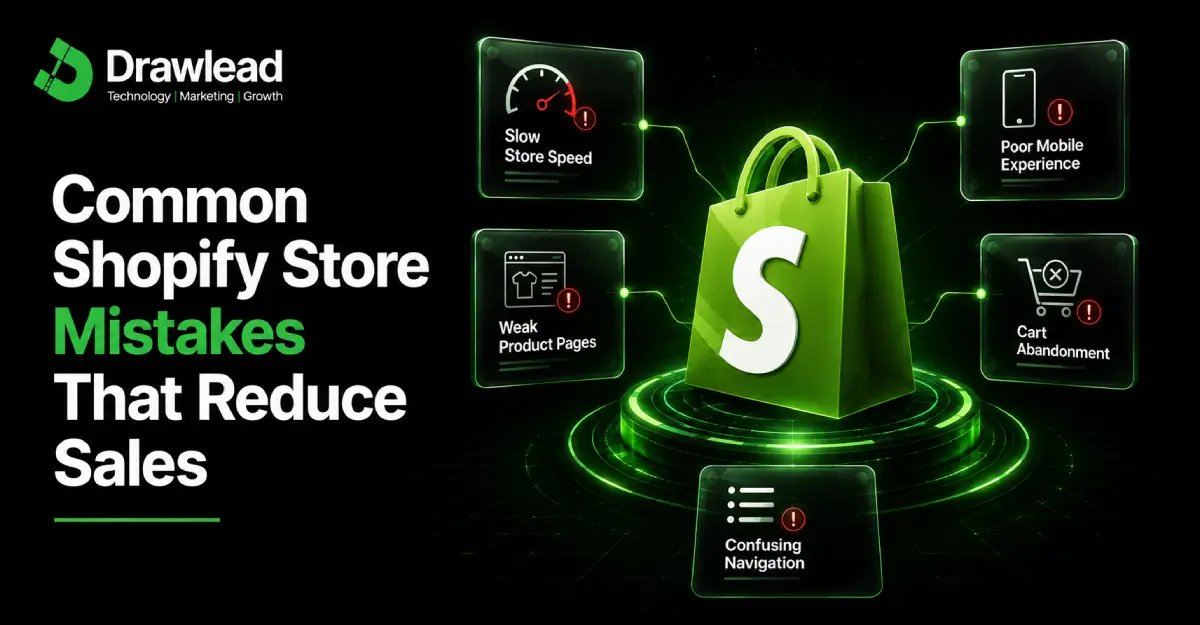
Common Shopify Store Mistakes That Reduce Sales
Common Shopify Store Mistakes That Reduce Sales Introduction Many ecommerce brands build a Shopify store but still struggle to get sales. The reason is often not the product. The real issue may be poor design, weak product pages, slow speed, missing SEO, or checkout problems. These common shopify mistakes can stop visitors from becoming customers. Drawlead helps businesses identify these issues and build conversion-focused Shopify stores that support better sales, enquiries, and ecommerce growth. What Are Common Shopify Store Mistakes? Common Shopify store mistakes are errors in store design, product page structure, user experience, SEO, speed, checkout flow, or tracking that reduce sales. A Shopify store should not only look good. It should help customers find products easily, understand product value, trust the brand, and complete purchases without confusion. When the store is not planned properly, visitors may leave even if they like the product. Why Fixing Shopify Mistakes Is Important Fixing Shopify website mistakes is important because ecommerce customers make quick decisions. If your store is slow, confusing, or not mobile friendly, users may move to another brand. A properly optimized Shopify store can help improve: Customer trust Product visibility User experience Add-to-cart rate Checkout completion Shopify sales conversion Online store performance For growing ecommerce brands, Shopify store optimization is not optional. It directly affects sales and business growth. Common Shopify Mistakes That Reduce Sales 1. Poor Mobile Store Experience Most ecommerce users browse products from mobile phones. If your Shopify store is not mobile responsive, customers may face issues with product images, buttons, menus, cart pages, or checkout forms. A mobile responsive Shopify store should have clear product images, easy navigation, readable text, and simple checkout steps. 2. Slow Loading Speed Shopify speed issues can reduce sales. If your store takes too long to load, customers may leave before viewing products. Slow speed can happen because of heavy images, too many apps, unoptimized theme files, or unnecessary scripts. A fast Shopify store improves user experience and helps customers browse products smoothly. 3. Weak Product Pages Shopify product page mistakes are one of the biggest reasons for low sales. A product page should answer customer questions clearly. A strong product page should include: Clear product title High-quality images Useful product description Price and offer details Size, colour, or variant options Delivery details Return information Customer reviews Clear add-to-cart button If product pages are incomplete, customers may not feel confident to buy. 4. Confusing Navigation Customers should easily find products, categories, offers, and contact details. If your menu is confusing, users may leave the store. A good Shopify store should have simple navigation, clear collection pages, search option, filters, and easy access to cart and checkout. 5. Poor Checkout Experience Shopify checkout mistakes can increase cart abandonment. Customers may leave if the checkout process is too long, confusing, or missing important payment and delivery information. A good checkout experience should be simple, secure, and easy to complete. 6. Missing Shopify SEO Setup Shopify SEO mistakes can affect your store visibility on Google. If your product pages and collection pages are not optimized, customers may not find your store through search. Important Shopify SEO elements include: SEO-friendly product titles Meta titles Meta descriptions Image alt text Internal links Collection page content Clean URLs Blog content Google Search Console setup SEO helps your Shopify store attract more organic visitors. 7. No Conversion Tracking Many Shopify merchants run ads or SEO campaigns without proper tracking. Without Google Analytics, Meta Pixel, and conversion tracking, it is difficult to know which pages, products, or campaigns generate sales. Tracking helps businesses understand customer behaviour and improve marketing decisions. Real-World Use Cases A fashion ecommerce brand may get traffic but no sales because product images are unclear and size details are missing. A jewellery Shopify store may lose customers because checkout does not clearly show delivery and return policies. A skincare ecommerce brand may get visitors from ads but lose leads because there is no WhatsApp button or enquiry form for product questions. These are common ecommerce conversion mistakean be fixed with better Shopify conversion optimization. Conclusion Shopify is a powerful ecommerce platform, but success depends on how well the store is designed, optimized, and tracked. Common Shopify mistakes like slow speed, poor mobile experience, weak product pages, checkout issues, and missing SEO can reduce sales. If your Shopify store is not converting visitors into customers, Drawlead can help with Shopify development, ecommerce website development, SEO, conversion tracking, and AI-powered website solutions. Contact Drawlead to build a better Shopify store that supports sales, leads, and long-term business growth. Recent Posts Why Every Business Needs a Professional Website in 2026 SEO Do’s and Don’ts: Best Practices for Small Businesses Search … How AI Improves Shopify Store Design and Sales Conversion How AI Improves Shopify Store Design and Sales Conversion Introduction … Book a Consultation Ready to take your business to the next level ? Book a Free Consultation Frequently Asked Questions 1. What are common Shopify mistakes? Common Shopify mistakes include poor mobile design, slow speed, weak product pages, confusing navigation, missing SEO, and checkout issues. 2. Why do Shopify stores lose sales? Shopify stores lose sales when customers face trust issues, slow loading pages, unclear product details, or complicated checkout steps. 3. How can Shopify store optimization help? Shopify store optimization improves speed, design, product pages, checkout flow, SEO, and conversion tracking to support better sales. 4. What causes Shopify cart abandonment? Yes. Product page SEO helps search engines understand your products and helps customers find them through product-related search queries. 5. Why choose Drawlead for Shopify development? Drawlead helps businesses build SEO-friendly, mobile responsive, and conversion-focused Shopify stores that support enquiries, sales, and ecommerce growth.
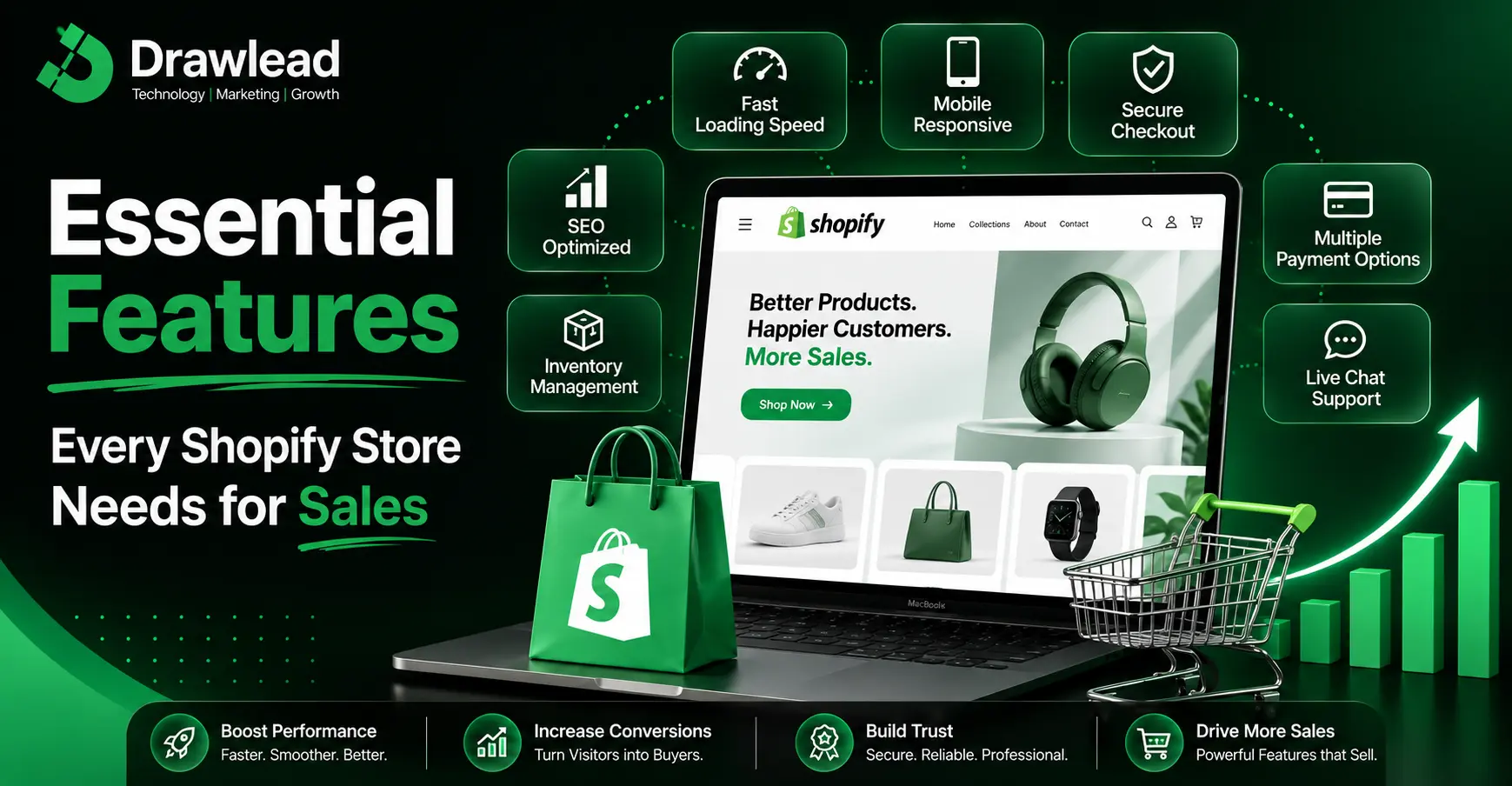
Essential Features Every Shopify Store Needs for Sales
Essential Features Every Shopify Store Needs for Sales Introduction A Shopify store should not only look good. It should help customers browse products easily, trust the brand, add products to cart, complete checkout, and contact the business when needed. Many ecommerce brands lose sales because their store has poor product pages, slow loading speed, no trust signals, weak checkout flow, or no tracking setup. That is why understanding Shopify ecommerce features is important for every business owner. The right features can improve customer experience, enquiries, WhatsApp leads, and sales opportunities. Drawlead helps businesses build Shopify stores with practical sales-focused features, clean design, SEO structure, and conversion tracking. What Are Shopify Ecommerce Features? Shopify ecommerce features are the tools, functions, and design elements that help an online store sell products smoothly. These features may include product pages, cart, checkout, payment gateway, shipping setup, customer reviews, discount codes, SEO settings, mobile responsive design, analytics, abandoned cart recovery, and app integrations. A good Shopify ecommerce store should make shopping simple from the first visit to final payment. Why Are Shopify Store Features Important for Businesses? Shopify store features directly affect customer trust and sales. If users cannot find products, understand prices, view images clearly, or complete checkout easily, they may leave the website. Good Shopify functionality helps businesses with: Better user experience Higher product enquiries More completed checkouts Better mobile shopping Improved customer trust More WhatsApp and phone call leads Better sales tracking Improved ecommerce SEO A Shopify store should be built for both design and performance. Key Benefits of Essential Shopify Store Features 1. Better Product Visibility A well-structured store helps customers find the right product quickly through categories, filters, collections, and search. 2. More Customer Trust Clear images, reviews, return policy, shipping details, and secure payment options can reduce buyer hesitation. 3. Higher Conversion Chances A clean product page, simple checkout, and clear CTA buttons can encourage customers to complete their purchase. 4. Better Mobile Experience Most users browse ecommerce websites on mobile. Shopify mobile responsive design helps customers shop comfortably on any device. 5. Better Marketing Performance With analytics, Meta Pixel, and conversion tracking, businesses can understand which campaigns bring traffic, enquiries, and sales. Important Features Every Shopify Store Needs for Sales 1. Mobile Responsive Design Your Shopify store should work perfectly on mobile, tablet, and desktop. Product images, buttons, menus, cart, and checkout should be easy to use on small screens. 2. Optimized Product Pages Shopify product page optimization is one of the most important sales features. Each product page should include: Clear product title High-quality images Short product description Benefits and features Price and offers Size or variant options Reviews Add to cart button Delivery and return information A confusing product page can reduce sales. 3. Fast and Simple Checkout Shopify checkout optimization helps reduce friction. Customers should be able to add products, review cart details, choose payment, and place orders without confusion. Avoid unnecessary steps, unclear shipping costs, and complicated forms. 4. Secure Payment Gateway Setup Shopify payment gateway setup is important for customer trust. A store should support suitable payment options such as cards, UPI, net banking, wallets, and cash-on-delivery if relevant. 5. Clear Shipping and Delivery Information Customers want to know when they will receive their order. Clear shipping charges, delivery timelines, and return policies can reduce cart abandonment. 6. Customer Reviews and Trust Signals Reviews, testimonials, secure checkout badges, return policy, contact details, and business information help customers feel confident before buying. 7. WhatsApp and Call Button Some customers may not buy immediately. They may want to ask about size, price, delivery, customization, or availability. A WhatsApp button and call button can help convert visitors into enquiries. 8. Abandoned Cart Recovery Shopify abandoned cart recovery helps businesses follow up with users who started checkout but did not complete the purchase. This can support better sales recovery. 9. SEO Setup Shopify SEO setup helps search engines understand your product pages and collections. Important SEO elements include: SEO-friendly URLs Meta titles Meta descriptions Image alt text Product content Collection page content Internal linking Fast loading pages 10. Analytics and Conversion Tracking Google Analytics, Google Search Console, Meta Pixel, and conversion tracking help business owners understand traffic, product views, cart actions, purchases, and campaign performance. Best Practices for Shopify Store Optimization Follow these simple best practices: Keep the design clean and easy to use. Add clear product categories and filters. Use strong product images. Write simple product descriptions. Add clear CTA buttons. Make checkout fast. Use WhatsApp and call buttons. Add reviews and trust elements. Track conversions. Improve SEO for products and collections. Real-World Use Cases A jewellery brand can use product filters, reviews, WhatsApp enquiries, and collection SEO to improve sales. A skincare brand can use product benefits, before-after style visuals, reviews, and subscription options. A fashion brand can use size charts, product variants, return policy, and abandoned cart recovery. A local Chennai ecommerce business can use Shopify website development with SEO, WhatsApp integration, and Meta Pixel tracking to improve enquiries and marketing results. Step-by-Step Process to Build a Sales-Focused Shopify Store Understand the product category and target audience. Select the right Shopify theme. Create a clean store structure. Add product categories and collections. Optimize product pages. Set up payment gateway and shipping. Add WhatsApp, call button, and enquiry options. Set up SEO basics. Add analytics and Meta Pixel. Test mobile, cart, checkout, and speed before launch. Basic Store vs Sales-Focused Shopify Store Feature Basic Shopify Store Sales-Focused Shopify Store Design Simple layout Conversion-focused layout Product Pages Basic details Images, benefits, reviews, CTA Checkout Default setup Optimized and tested Lead Options Limited WhatsApp, call, enquiry form SEO Minimal Product and collection SEO Tracking Not always included GA, GSC, Meta Pixel Goal Online presence Sales and enquiries Conclusion A successful Shopify store needs more than product uploads and a theme. It needs the right Shopify ecommerce features to support trust, speed, mobile experience, checkout, SEO, tracking, and customer communication. If you want a Shopify store that

Shopify Website Development Cost in India: Complete Guide
SEO Do’s and Don’ts: Best Practices for Small Businesses Search Engine Optimization (SEO) is essential for increasing your website’s visibility, but it’s important to follow best practices to avoid common pitfalls. This blog will outline the key do’s and don’ts of SEO for small businesses, providing actionable advice to help them improve their online presence. The blog will cover: Do’s: Conduct Keyword Research: Identify and use relevant keywords that your target audience is searching for. Create High-Quality Content: Focus on producing valuable, informative, and engaging content that meets users’ needs. Optimize Meta Tags: Ensure your title tags, meta descriptions, and header tags are optimized with relevant keywords. Improve Site Speed: A fast-loading website is crucial for user experience and SEO rankings. Build Quality Backlinks: Earn backlinks from reputable sites to enhance your site’s authority. Don’ts: Avoid Keyword Stuffing: Overloading your content with keywords can lead to penalties from search engines. Don’t Ignore Mobile Optimization: Failing to optimize for mobile can hurt your search engine rankings. Avoid Duplicate Content: Duplicate content can confuse search engines and negatively impact rankings. Don’t Neglect Internal Linking: Proper internal linking helps search engines crawl your site and improves user navigation. Avoid Black Hat SEO Practices: Techniques like cloaking, link farming, and buying links can result in severe penalties. How AI Improves Shopify Store Design and Sales Conversion Introduction Many business owners want to start selling online but are unsure about the shopify website development cost in India. The cost can change based on design, features, product upload, payment gateway, SEO setup, speed optimization, and custom requirements. Choosing the cheapest option may save money at first, but it can affect website performance, trust, enquiries, and sales later. A well-developed Shopify website can help businesses get more product enquiries, WhatsApp leads, phone calls, and online sales. At Drawlead, we help businesses build Shopify and ecommerce websites with a clean design, lead generation setup, SEO-friendly structure, and conversion-focused features. What Is Shopify Website Development Cost in India? Shopify website development cost means the total amount required to plan, design, develop, launch, and maintain a Shopify ecommerce store. This may include: Shopify monthly or yearly plan Theme setup or custom design Product page design Product upload Payment gateway setup Shipping setup App integration SEO setup Speed optimization Tracking setup Maintenance support The final Shopify website cost in India depends on how simple or advanced your online store needs to be. Why Is Shopify Website Development Cost Important for Businesses? Understanding the cost helps business owners plan their ecommerce budget properly. A Shopify website is not only about design. It should help customers trust your brand, view products easily, add items to cart, make payments safely, and contact your business without confusion. A good Shopify ecommerce website development plan can help improve: Online store performance Customer experience Mobile shopping experience Product visibility Lead generation WhatsApp enquiries Conversion tracking SEO visibility Sales opportunities When the website is planned properly, it becomes a business growth tool, not just an online brochure. Average Shopify Website Development Cost in India The cost can vary based on project scope. Here is a simple estimate: Basic Shopify Store: ₹25,000 to ₹60,000Suitable for small businesses with limited products and basic pages. Professional Shopify Website: ₹60,000 to ₹1,50,000Suitable for growing brands that need better design, product structure, SEO setup, and lead generation features. Custom Shopify Ecommerce Website: ₹1,50,000 to ₹4,00,000+Suitable for brands needing custom design, advanced apps, automation, custom sections, and conversion-focused development. Enterprise Shopify Store: ₹4,00,000+Suitable for large ecommerce brands with advanced customization, large product catalogues, third-party integrations, and ongoing support. These are general estimates. The exact Shopify development cost in India depends on your business needs. Key Factors That Affect Shopify Website Cost 1. Website Design Shopify website design cost depends on whether you use a ready-made theme, premium theme, or custom design. Custom design usually costs more but gives better brand identity and user experience. 2. Product Count A store with 20 products will cost less than a store with 500 or 5,000 products. Product upload, category setup, filters, and product page optimization affect the total cost. 3. Features and Apps Apps for reviews, WhatsApp chat, delivery tracking, upselling, email marketing, abandoned cart recovery, and loyalty programs can increase cost. 4. Payment and Shipping Setup Payment gateway, shipping rules, tax setup, coupons, and order notification setup are important for ecommerce websites. 5. SEO and Tracking Setup A Shopify website should include SEO-friendly URLs, meta titles, meta descriptions, image alt text, Google Analytics, Google Search Console, Meta Pixel, and conversion tracking. Important Features Businesses Should Include A good Shopify ecommerce website should include: Mobile responsive design Fast loading pages SEO-friendly structure Easy product navigation Clear product pages WhatsApp button Call button Enquiry form Popup lead form Landing page design Thank you page Google Analytics setup Google Search Console setup Meta Pixel setup Conversion tracking Secure checkout Product review section These features help customers move smoothly from product browsing to enquiry or purchase. Shopify Website Development in Chennai Many Chennai businesses are now moving from offline sales to ecommerce. Whether you run a fashion brand, jewellery store, skincare brand, food business, or retail shop, a Shopify website can help you reach more customers. If you are looking for a website development company in Chennai, Shopify website development in Chennai, ecommerce website development in Chennai, or SEO-friendly website development in Chennai, choose a team that understands both website development and lead generation. Drawlead helps Chennai businesses create ecommerce websites that are clean, fast, mobile-friendly, and conversion-focused. Conclusion Shopify website development cost in India depends on your store size, design quality, features, apps, SEO setup, tracking setup, and customization needs. A basic Shopify store may be suitable for new businesses, while growing brands may need a professional or custom Shopify ecommerce website. Recent Posts Why Every Business Needs a Professional Website in 2026 SEO Do’s and Don’ts: Best Practices for Small Businesses Search … How AI Improves Shopify Store Design and Sales Conversion How AI Improves Shopify Store
How AI Improves Shopify Store Design and Sales Conversion
How AI Improves Shopify Store Design and Sales Conversion Introduction Ecommerce competition is growing fast. Today, customers do not just want an online store. They expect a smart, fast, mobile-friendly, and easy shopping experience. This is why AI Shopify store design is becoming important for ecommerce brands that want better sales and better customer engagement. A normal Shopify store may show products and accept orders. But an AI-powered Shopify store can help users find the right products, get quick support, receive personalized suggestions, and complete purchases with less confusion. At Drawlead, we help businesses create Shopify websites that are not only attractive but also conversion-focused, SEO-friendly, and built for long-term ecommerce growth. What Is AI Shopify Store Design? AI Shopify store design means using artificial intelligence features and smart ecommerce strategies to improve the way a Shopify store looks, works, and converts visitors into customers. It can include AI product recommendations, chatbot support, personalized shopping experience, smart search, automated customer support, and conversion tracking. A professional Shopify website development company can combine strong design, Shopify store development, and AI ecommerce optimization to create a better online shopping experience. Why Is AI Important for Shopify Stores? AI is important for Shopify stores because it helps customers make faster buying decisions. Many users visit an online store, browse products, compare options, and leave without buying. AI can reduce this problem by guiding users with better suggestions and support. AI can help ecommerce brands with: Better product discovery Faster customer support Personalized product suggestions Improved cart and checkout experience Better customer engagement More sales opportunities Smarter ecommerce marketing Better user journey planning For growing ecommerce brands, AI is not only a trend. It is becoming a useful tool for Shopify conversion optimization. Key Benefits of AI Shopify Store Design 1. Better Product Recommendations AI product recommendations help customers discover products based on their interest, browsing behaviour, or related items. For example, if a customer views a handbag, AI can suggest matching accessories or similar products. This improves the shopping experience and can increase average order value. 2. Improved Customer Support with AI Chatbots An AI chatbot for Shopify can answer common customer questions instantly. It can help users with product details, delivery questions, return policy, size guide, order status, and basic support. Shopify chatbot integration is useful because customers do not always want to wait for manual replies. Fast answers can improve trust and sales conversion. 3. Personalized Shopping Experience Personalization makes the store feel more relevant to each customer. AI can show related products, popular items, recently viewed products, or special offers based on customer behaviour. A personalized shopping experience can keep users engaged for a longer time and encourage them to buy. 4. Better Shopify Product Page Optimization Product pages are very important for ecommerce sales. AI can support product page improvement by helping with better product descriptions, product highlights, FAQs, and customer-focused content. A strong Shopify product page should include clear images, product benefits, pricing, delivery details, trust badges, and a strong add-to-cart button. 5. Smarter Cart and Checkout Optimization Many customers add products to cart but do not complete the purchase. Shopify cart optimization and Shopify checkout optimization help reduce drop-offs. AI can support this by showing reminders, related products, offers, and support options during the buying journey. Important Features of a Conversion-Focused Shopify Store A conversion-focused Shopify store is designed to turn visitors into buyers or enquiries. It should be simple, clear, fast, and easy to use. Important features include: Mobile responsive Shopify store Fast loading pages Clear product categories Strong product images Easy navigation AI chatbot support Product recommendation sections Simple cart and checkout flow WhatsApp button Call button Enquiry form Popup lead form Thank you page Google Analytics setup Google Search Console setup Meta Pixel setup Conversion tracking These features help improve Shopify sales conversion and ecommerce sales growth. Common Shopify Store Mistakes to Avoid Many ecommerce brands have a Shopify store but do not get good sales. The issue is often not Shopify. The problem is poor store design, weak user experience, or missing conversion strategy. Common mistakes include: Slow loading website Poor mobile design Weak product descriptions Confusing navigation No AI chatbot or support option No product recommendations Poor collection page structure No SEO setup Complicated checkout process No conversion tracking No WhatsApp or enquiry option A professional Shopify website developer can identify these issues and improve the store for better performance. How AI Shopify Store Design Helps Generate Leads Not every customer buys immediately. Some users may want to ask about pricing, product size, bulk orders, customization, delivery, or return options. This is where lead generation becomes important. An AI-powered ecommerce website can help businesses generate: More enquiries More phone calls More WhatsApp leads More contact form submissions Better landing page conversions Better customer trust Better sales opportunities With WhatsApp integration, call buttons, enquiry forms, popup lead forms, landing pages, thank you pages, and conversion tracking, businesses can capture leads and understand customer actions clearly. Local SEO for Shopify Website Development in Chennai For Chennai businesses, a strong Shopify store can support both ecommerce sales and local brand visibility. If you are looking for Shopify website development in Chennai, it is important to choose a team that understands ecommerce, SEO, design, and lead generation. Drawlead also supports businesses looking for a website development company in Chennai, WordPress website development in Chennai, ecommerce website development in Chennai, SEO-friendly website development in Chennai, and a digital marketing agency in Chennai. Local SEO helps customers discover your brand when they search for products, services, or ecommerce solutions near them. Conclusion AI can improve Shopify store design by making the shopping experience smarter, faster, and more personalized. From AI product recommendations to chatbot support, product page optimization, cart improvement, and conversion tracking, AI helps ecommerce brands improve customer experience and sales conversion. Need a Shopify store that supports leads, sales, and business growth? Contact Drawlead for Shopify website development, ecommerce website development, AI-based website solutions, and

Why Every Business Needs a Professional Website in 2026
SEO Do’s and Don’ts: Best Practices for Small Businesses Search Engine Optimization (SEO) is essential for increasing your website’s visibility, but it’s important to follow best practices to avoid common pitfalls. This blog will outline the key do’s and don’ts of SEO for small businesses, providing actionable advice to help them improve their online presence. The blog will cover: Do’s: Conduct Keyword Research: Identify and use relevant keywords that your target audience is searching for. Create High-Quality Content: Focus on producing valuable, informative, and engaging content that meets users’ needs. Optimize Meta Tags: Ensure your title tags, meta descriptions, and header tags are optimized with relevant keywords. Improve Site Speed: A fast-loading website is crucial for user experience and SEO rankings. Build Quality Backlinks: Earn backlinks from reputable sites to enhance your site’s authority. Don’ts: Avoid Keyword Stuffing: Overloading your content with keywords can lead to penalties from search engines. Don’t Ignore Mobile Optimization: Failing to optimize for mobile can hurt your search engine rankings. Avoid Duplicate Content: Duplicate content can confuse search engines and negatively impact rankings. Don’t Neglect Internal Linking: Proper internal linking helps search engines crawl your site and improves user navigation. Avoid Black Hat SEO Practices: Techniques like cloaking, link farming, and buying links can result in severe penalties. Why Every Business Needs a Professional Website in 2026 Introduction In 2026, every business needs a strong online presence to compete and grow. A poor website can make customers lose trust, leave quickly, or choose a competitor. This is why professional website design is important for businesses of all sizes. A well-designed website helps people understand your services, contact your team, and take action easily. It also supports SEO, lead generation, sales, and brand credibility. Drawlead helps Chennai businesses build professional, mobile-friendly, and SEO-friendly websites that are designed for enquiries, calls, WhatsApp leads, and business growth. What is Professional Website Design? Professional website design is the process of creating a clean, user-friendly, mobile responsive, and business-focused website. It is not just about colours and layout. A good website should load fast, explain your services clearly, guide users to important pages, and make it easy for them to contact you. A professional website usually includes a clear homepage, service pages, enquiry forms, call buttons, WhatsApp integration, SEO-friendly content, fast loading speed, and conversion tracking. Why is a Professional Website Important for Businesses? Your website is often the first place customers check before contacting your business. If your website looks outdated or confusing, users may not trust your brand. A professional website helps businesses: Create a strong first impression Build customer trust Explain products or services clearly Improve Google visibility Generate more enquiries Support paid ads and SEO campaigns Convert visitors into leads For startups, local businesses, service providers, and ecommerce brands, a website works like a 24/7 online sales assistant. Key Benefits of Professional Website Design Better Customer Trust A clean and modern website makes your business look serious and reliable. Customers are more likely to contact a business that has a professional online presence. Mobile-Friendly Experience Most users browse websites from mobile phones. Responsive website design helps your website look good and work smoothly on mobile, tablet, and desktop. SEO-Friendly Growth SEO-friendly website development helps search engines understand your pages better. This can improve your chances of ranking for service-based keywords. Better Lead Generation A lead generation website is planned to make users take action. This can include calling, submitting forms, chatting on WhatsApp, or requesting a consultation. Important Features Every Business Website Needs A strong business website should have the right features for user experience and conversions. Important features include: Mobile responsive design Fast loading pages Clear service sections SEO-friendly page structure Strong call-to-action buttons WhatsApp button Call button Enquiry form Popup lead form Landing page design Thank you page Google Analytics setup Google Search Console setup Meta Pixel setup Conversion tracking These features help businesses track performance and understand which pages or campaigns bring leads. Common Website Mistakes to Avoid Many businesses lose leads because of simple website mistakes. Avoid these common errors: Slow website speed Poor mobile design No clear CTA Weak service content Confusing navigation No enquiry form No SEO setup No tracking setup Outdated design No WhatsApp or call option Working with a professional website design company can help avoid these issues and create a website that supports long-term growth. How a Professional Website Helps Generate Leads A website should do more than display information. It should help visitors take action. A conversion-focused website can help businesses get: More enquiries More phone calls More WhatsApp leads More contact form submissions Better landing page conversions Better customer trust Better sales opportunities For example, if a visitor lands on a service page and sees a clear CTA, WhatsApp button, service details, testimonials, and enquiry form, they are more likely to contact the business. Local SEO for Chennai Businesses For local businesses, location-based visibility is very important. A website can be optimized with Chennai-focused keywords naturally. Drawlead provides support for businesses searching for a website development company in Chennai, website design company in Chennai, SEO-friendly website development in Chennai, WordPress website development in Chennai, ecommerce website development in Chennai, and digital marketing agency in Chennai. The goal is to use local keywords naturally inside service pages, blogs, headings, image alt text, and internal links without keyword stuffing. Conclusion A professional website is no longer optional for businesses in 2026. It helps build trust, improve visibility, explain services, and generate quality leads. A well-planned website can support SEO, paid ads, WhatsApp enquiries, contact form submissions, and sales growth. If you want a website that looks professional and brings real business enquiries, contact Drawlead today for professional website design, website development, WordPress website development, Shopify development, ecommerce website development, or lead generation website development. Recent Posts Why Every Business Needs a Professional Website in 2026 SEO Do’s and Don’ts: Best Practices for Small Businesses Search … How AI Improves Shopify Store Design and Sales Conversion How