
SEO Do’s and Don’ts: Best Practices for Small Businesses Search …
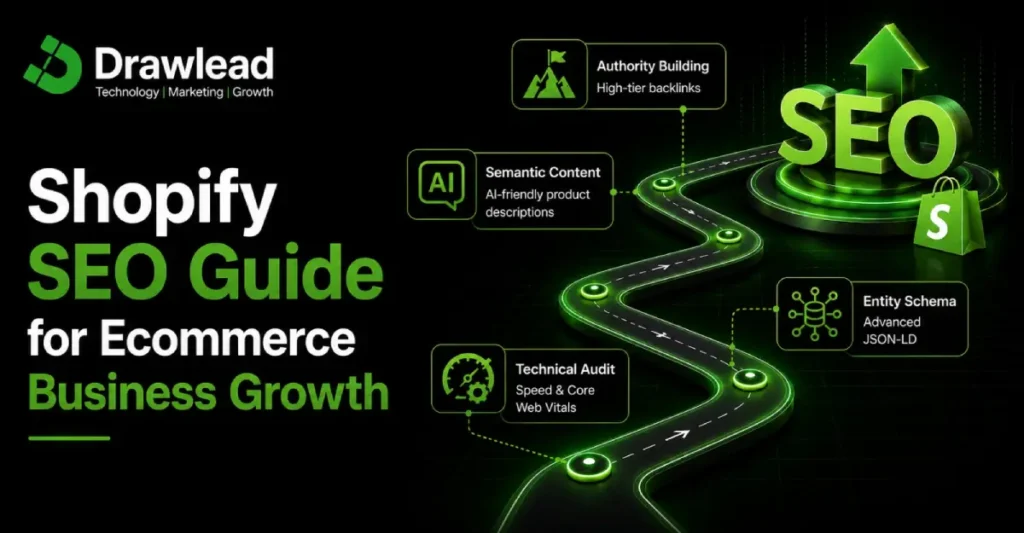
Shopify SEO Guide for Ecommerce Business Growth
Introduction
Launching a Shopify store is easy, but growing it through organic traffic needs proper SEO planning. Many ecommerce businesses upload products, run ads, and wait for sales, but they forget one important thing: customers must be able to find their products on Google.
That is why many business owners search for how to improve SEO on Shopify. Shopify SEO helps your store rank for product searches, category searches, buying-intent keywords, and brand-related searches.
At Drawlead, we help ecommerce businesses with Shopify website development, Shopify SEO, website development, ecommerce SEO, Meta Ads, and conversion-focused digital solutions. This guide explains how Shopify SEO supports ecommerce business growth without keyword stuffing or complicated technical language.
What Is Shopify SEO?
Shopify SEO is the process of optimizing your Shopify store so that search engines can understand your products, collections, pages, and content better.
It includes:
- Product page SEO
- Collection page SEO
- Meta title optimization
- Meta description optimization
- Image alt text
- SEO-friendly URLs
- Internal linking
- Blog content
- Technical SEO
- Mobile optimization
- Page speed improvement
- Schema markup
- Google Search Console setup
In simple words, Shopify SEO helps your ecommerce store become easier to find, easier to understand, and easier to trust.
Why Shopify SEO Is Important for Ecommerce Business Growth
Paid ads can bring quick traffic, but SEO supports long-term growth. When your Shopify store ranks on Google, customers can find your products even without clicking paid ads every time.
Shopify SEO helps ecommerce businesses improve:
- Organic traffic
- Product visibility
- Collection page ranking
- Brand trust
- Customer engagement
- Sales opportunities
- Long-term business growth
- Lower dependency on paid ads
For example, if you sell jewellery, skincare products, fashion items, home decor, fitness products, or accessories, SEO can help your product and collection pages appear when users search with purchase intent.
Is Shopify Good for SEO?
Yes, Shopify is good for SEO when it is optimized properly. Shopify provides basic SEO features like editable title tags, meta descriptions, image alt text, redirects, sitemaps, and mobile-friendly themes.
But basic setup alone is not enough. Your store also needs keyword research, unique product descriptions, optimized collection pages, fast loading speed, internal linking, blog content, and proper tracking setup.
So instead of asking “Is Shopify good for SEO?”, the better question is:
Is my Shopify store properly optimized for SEO and conversions?
How to Improve SEO on Shopify
1. Optimize Product Page Titles
Product titles should be clear, descriptive, and search-friendly. Avoid using only short names, codes, or unclear product titles.
For example, instead of using “Classic 102,” use a title like:
Classic Gold Plated Silver Necklace for Women
A good title helps both customers and search engines understand what the product is.
2. Write Unique Product Descriptions
Many Shopify stores use short or copied product descriptions. This can reduce SEO value and customer trust.
A strong product description should include:
- Product details
- Key benefits
- Material or features
- Size, color, or variant details
- Usage occasion
- Care instructions
- Customer-focused selling points
The description should sound natural and helpful. Do not repeat keywords unnecessarily.
3. Optimize Collection Pages
Collection pages are very important for Shopify SEO. These pages can rank for category-based keywords such as “silver earrings,” “women’s handbags,” “organic skincare,” or “gym wear for men.”
A good collection page should include:
- SEO-friendly collection title
- Short intro content
- Product listings
- Internal links
- Meta title
- Meta description
- Clean URL
- FAQs where needed
Collection page SEO helps bring traffic to product categories, not only individual products.
4. Improve Meta Titles and Meta Descriptions
Meta titles and descriptions help users decide whether to click your page from Google search results.
A good meta title should be clear, keyword-focused, and attractive. A good meta description should explain the benefit and include a soft CTA.
Example:
Meta Title:
Gold Plated Silver Jewellery Online
Meta Description:
Shop elegant gold plated silver jewellery for weddings, daily wear and gifting. Explore premium designs online today.
This helps improve CTR and search visibility.
5. Add Image Alt Text
Shopify image SEO is important because ecommerce websites depend heavily on product images. Image alt text helps search engines understand the image and also improves accessibility.
Example:
Bad Alt Text:
IMG_1001
Good Alt Text:
Gold plated silver necklace for women with traditional design
Use clear and natural image descriptions.
6. Use SEO-Friendly URLs
Keep Shopify URLs short, clean, and readable. Avoid confusing numbers or unnecessary words.
Example:
Good URL:
/collections/gold-plated-silver-jewellery
Poor URL:
/collections/product-category-12345
Clean URLs improve both user experience and search engine understanding.
7. Improve Internal Linking
Internal linking helps users and search engines move through your website easily. It also helps pass SEO value from one page to another.
You can link:
- Blog pages to product collections
- Product pages to related collections
- Collection pages to best-selling products
- Homepage to important categories
- Service pages to related blogs
- Blogs to other useful blogs
For example, Shopify SEO is now becoming smarter with automation, content planning, analytics, and customer behaviour tracking. To understand how AI supports modern business websites, read our guide on AI website development in the blog How AI Is Changing Website Development for Businesses.
8. Improve Shopify Site Speed
A slow Shopify store can affect user experience and conversions. If product pages take too long to load, users may leave before buying.
To improve speed:
- Compress product images
- Remove unused apps
- Use a lightweight theme
- Avoid heavy banners
- Reduce unnecessary code
- Test mobile speed
- Optimize product media
Better speed supports SEO, customer experience, and ecommerce sales.
9. Make the Store Mobile-Friendly
Most ecommerce users browse and shop through mobile phones. Your Shopify store should look clean and work smoothly on all screen sizes.
Check:
- Product images
- Add-to-cart button
- Menu navigation
- Checkout flow
- Font size
- Banner layout
- Page speed
- Mobile product filters
A mobile-friendly Shopify store helps improve user experience and conversion chances.
10. Add Blog Content for Ecommerce SEO
Blog content helps Shopify stores target informational keywords and guide customers before they buy.
Useful Shopify blog topics include:
- Buying guides
- Product comparison guides
- Styling tips
- Care guides
- Gift guides
- Seasonal product ideas
- Product FAQs
- Trend-based content
For example, a fashion ecommerce store can write a blog like “How to Choose the Right Outfit for Office Wear” and internally link to office wear collections.
Shopify SEO for Chennai Ecommerce Businesses
For businesses in Chennai, Shopify SEO can support ecommerce growth and local brand visibility. If your business serves Chennai customers or has a physical store, location-based content can help.
You can naturally use keywords like:
- Shopify SEO services in Chennai
- Ecommerce SEO services in Chennai
- Shopify website development in Chennai
- Ecommerce website development in Chennai
- Digital marketing agency in Chennai
A Chennai-based ecommerce brand can also add local delivery details, store location, Google Business Profile links, contact information, and city-focused landing pages.
Drawlead helps Chennai businesses with Shopify development, Shopify SEO, ecommerce website development, website design, SEO strategy, Meta Ads, and conversion-focused website solutions
Common Shopify SEO Mistakes to Avoid
Many Shopify stores do not perform well because they miss basic SEO steps.
Avoid these mistakes:
- Using copied product descriptions
- Not optimizing collection pages
- Missing image alt text
- Poor meta titles and descriptions
- Slow loading product pages
- Too many unused Shopify apps
- No internal linking
- No blog content
- Weak mobile experience
- No Google Search Console setup
- No conversion tracking
- Ignoring technical SEO issues
Shopify SEO is not a one-time task. It needs regular monitoring, content updates, and technical improvements.
How Drawlead Helps with Shopify SEO
Drawlead helps ecommerce businesses build and optimize Shopify stores for better visibility, user experience, and sales growth.
Our Shopify SEO support may include:
- Shopify SEO audit
- Product page optimization
- Collection page SEO
- Meta title and description writing
- Image alt text optimization
- Blog content planning
- Internal linking strategy
- Google Search Console setup
- Google Analytics setup
- Meta Pixel setup
- Speed improvement suggestions
- Ecommerce conversion tracking
- Shopify website development support
We also help businesses connect Shopify SEO with automation, analytics, customer behaviour tracking, and AI-supported content planning. You can learn more in our related blog How AI Is Changing Website Development for Businesses, where we explain how AI website development supports modern business websites.
The goal is to help Shopify stores attract the right audience, improve product visibility, build trust, and turn visitors into customer
Conclusion
Shopify SEO is important for ecommerce businesses that want long-term growth, better organic traffic, and more sales opportunities. A well-optimized Shopify store helps customers find products, trust the brand, and complete purchases more easily.
To improve SEO on Shopify, focus on product pages, collection pages, content, speed, mobile experience, internal linking, and tracking. Also, connect your SEO strategy with modern tools, automation, and AI-supported planning for better performance.
For expert support, contact Drawlead for Shopify SEO, Shopify website development, ecommerce website development, SEO services, Meta Ads, and AI-powered website solutions.
Call, WhatsApp, or submit an enquiry to Drawlead to grow your ecommerce business with a better Shopify SEO strategy.
Recent Posts
How AI Improves Shopify Store Design and Sales Conversion Introduction …
Frequently Asked Questions
Shopify SEO is the process of optimizing a Shopify store to improve search engine visibility, organic traffic, product discovery, and ecommerce sales opportunities.
You can improve Shopify SEO by optimizing product pages, collection pages, meta titles, descriptions, image alt text, URLs, internal links, site speed, mobile design, and blog content.
You can improve Shopify SEO by optimizing product pages, collection pages, meta titles, descriptions, image alt text, URLs, internal links, site speed, mobile design, and blog content.
Yes. Product page SEO helps search engines understand your products and helps customers find them through product-related search queries.
Yes. AI can support Shopify SEO through content planning, keyword ideas, product descriptions, customer behaviour analysis, chatbot support, and conversion tracking. But expert review is still important.