Introduction
Effective shopify product page optimization transforms casual store browsers into loyal, paying customers by addressing usability friction, clarifying product value, and building instant trust. When online storefronts struggle with high bounce rates or abandoned carts, the root cause often traces back to cluttered layouts, unclear product descriptions, or sluggish page load speeds that frustrate modern shoppers.
Understanding how to systematically refine every visual and structural element on your product listings is essential for sustainable ecommerce growth. Whether you manage a boutique retail store or a large wholesale catalogue, refining your digital catalog architecture supports better traffic conversion.
In this comprehensive guide, you will learn practical, actionable techniques to enhance your store layout, leverage digital commerce best practices, and collaborate with digital experts at Drawlead business solutions to scale your digital presence.
Quick Answer
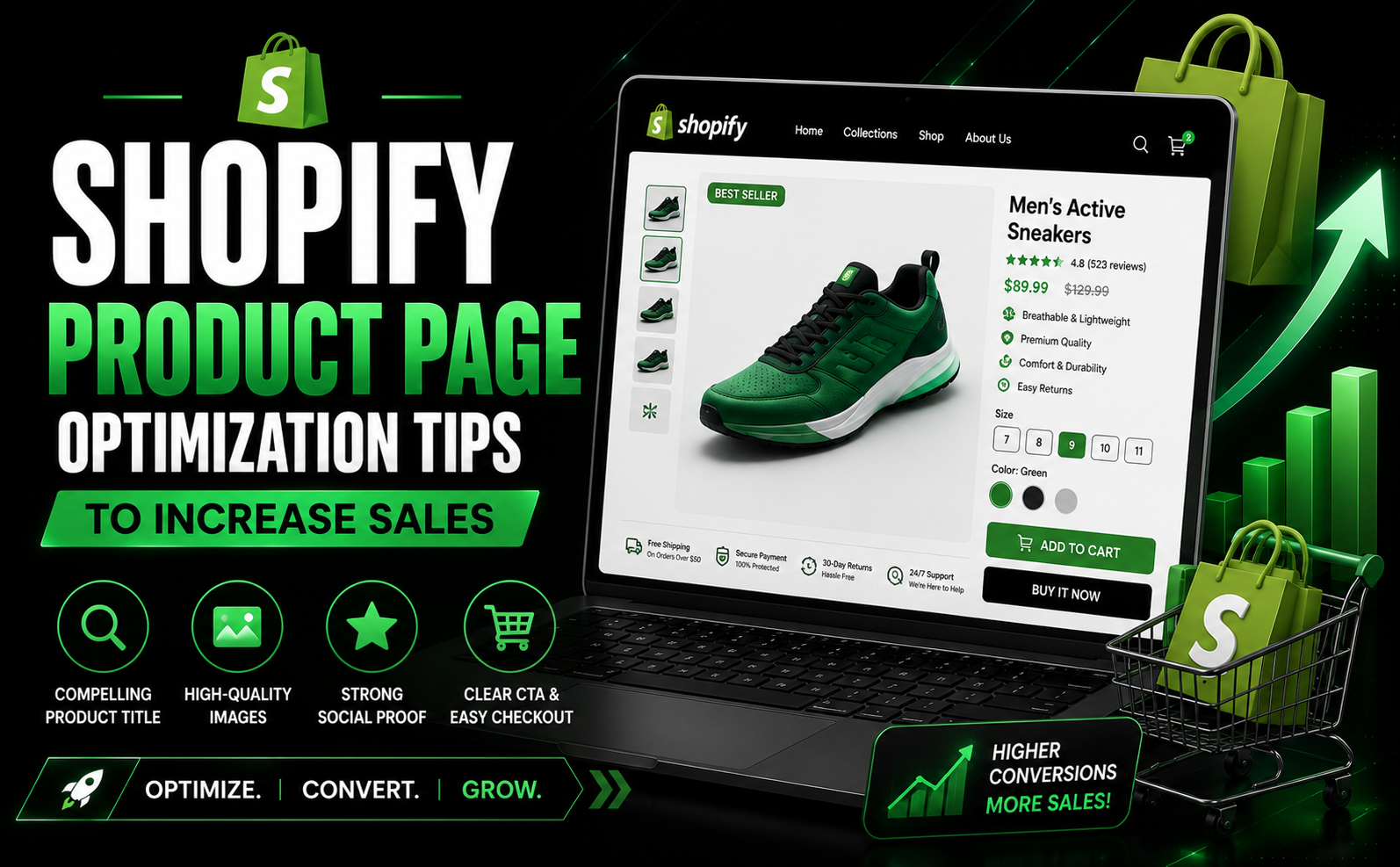
Shopify product page optimization involves systematically refining visual hierarchies, persuasive copywriting, high-resolution imagery, fast loading speeds, and frictionless checkout pathways to maximize conversion rates and revenue per visitor.
- Visual clarity: Use high-resolution images, 360-degree product views, and contextual lifestyle videos to showcase items clearly.
- Persuasive copy: Highlight distinct customer benefits, technical specifications, and sizing details clearly above the fold.
- Social proof: Feature authentic customer reviews, star ratings, and trust badges near the add-to-cart button.
- Performance speed: Compress image assets and optimize script execution to maintain rapid page load times.
- Call to action: Ensure add-to-cart buttons are prominent, high-contrast, and easily accessible on all mobile screens.
Understanding Ecommerce Conversion Fundamentals
Product page optimization sits at the core of digital retail success because it represents the critical conversion threshold where browsing intent converts into commercial action. Understanding how visitors interact with your online catalog helps store owners eliminate invisible barriers that quietly drain sales performance every single day.
Modern consumers arrive at product pages with high expectations shaped by major marketplace platforms. They demand instant clarity regarding product dimensions, material composition, shipping timelines, pricing transparency, and return policies within seconds of landing on your website.
When these core details remain hidden or difficult to locate, potential buyers immediately abandon the session. Implementing a structured optimization framework ensures your store consistently meets user expectations while supporting long-term business scalability and brand loyalty.
Identifying Common Ecommerce Bottlenecks
Many online store owners experience stagnant sales despite running expensive traffic campaigns because structural site issues silently undermine conversion rates. Recognizing these common operational bottlenecks allows merchants to prioritize high-impact fixes before investing additional capital in marketing campaigns.
Disconnected workflows, poor inventory visibility, and sluggish server response times often create friction during the critical buying journey. Examining your existing store metrics helps uncover hidden drop-off points that require immediate attention and technical intervention.
- Slow loading speeds: Unoptimized image files and excessive third-party apps delay rendering times, causing impatient shoppers to exit immediately.
- Generic product descriptions: Relying solely on manufacturer-provided text fails to differentiate your brand or communicate unique customer benefits.
- Complicated navigation: Burying essential variant selections, sizing guides, or shipping details behind multiple clicks frustrates mobile users.
- Hidden trust signals: The absence of secure payment icons, clear return policies, and verified reviews creates unnecessary purchase hesitation.
- Inventory discrepancies: Displaying out-of-stock items as available damages customer trust and complicates post-purchase fulfillment management.
How Conversion Rate Optimization Works
Conversion rate optimization operates as a disciplined, data-driven methodology designed to increase the percentage of website visitors who complete a desired commercial action, such as purchasing an item or submitting an inquiry. Rather than simply driving more traffic, optimization focuses on maximizing the value of existing traffic streams.
The optimization process relies on continuous auditing, user behavior analysis, split testing, and iterative design improvements. By evaluating quantitative metrics alongside qualitative customer feedback, merchants can identify specific friction points and deploy targeted solutions.
Successful optimization requires cross-departmental coordination between marketing, inventory management, and technical development teams. When aligned correctly, these internal efforts ensure that every product listing communicates value clearly, operates reliably across all devices, and guides buyers smoothly toward a confident purchase decision.
Core Benefits and Important Limitations
Implementing a rigorous product page optimization strategy delivers measurable advantages for growing ecommerce businesses, but store owners must also remain realistic about operational trade-offs and external dependencies. Recognizing these boundaries ensures sustainable expectations and prevents misplaced resource allocation.
A well-optimized storefront improves user engagement, reduces customer acquisition costs, and enhances brand perception across competitive digital markets. However, optimization alone cannot compensate for uncompetitive pricing, poor product-market fit, or unreliable fulfillment operations.
- Higher conversion rates: Clear layouts and persuasive messaging systematically increase the proportion of visitors who complete checkout transactions.
- Reduced cart abandonment: Transparent shipping costs and streamlined variant selections minimize last-minute purchase hesitation.
- Improved SEO visibility: Well-structured content, descriptive alt tags, and fast page performance support better search engine rankings.
- Resource investment: Optimization requires ongoing time, technical expertise, and continuous testing rather than a one-time setup fix.
- Traffic dependency: Optimization maximizes existing conversion efficiency, but sustained business growth still requires steady, qualified visitor acquisition.
Essential Shopify Product Page Elements
Maximizing sales performance requires careful attention to specific structural components that directly influence buyer psychology and decision-making confidence. Integrating these proven elements correctly transforms standard product listings into high-converting digital assets.
Every element on the page should serve a distinct purpose, guiding the visitor's eye logically from initial discovery down to the primary call-to-action button. Balancing visual appeal with factual clarity is the hallmark of professional ecommerce web development.
- High-impact titles: Use concise, descriptive product names that incorporate relevant primary and secondary keywords naturally for search visibility.
- Compelling visual assets: Display multiple high-resolution images, zoom functionality, and short video clips demonstrating product usage in real-world contexts.
- Strategic pricing display: Clearly show retail pricing, promotional discounts, and available financing options without confusing hidden fees.
- Prominent call to action: Design high-contrast add-to-cart and buy-now buttons that remain immediately visible during mobile and desktop scrolling.
- Transparent inventory status: Real-time stock indicators create healthy urgency while preventing frustrating overselling scenarios.
Step-by-Step Optimization Process
Executing a structured optimization plan ensures that technical improvements and copywriting refinements occur in a logical sequence that minimizes disruption to active sales operations. Following a repeatable process helps teams maintain high quality standards across large product catalogues.
- Audit existing performance: Review analytics data to identify pages with high traffic volume but unusually low conversion rates.
- Analyze user behavior: Utilize session recordings and heatmaps to observe where visitors click, scroll, or experience navigation friction.
- Refine visual assets: Compress and standardize product photography, ensuring fast rendering speeds and consistent framing across all devices.
- Enhance product copy: Rewrite descriptions to focus on customer benefits, technical specifications, and practical use cases rather than basic features.
- Strengthen trust signals: Integrate verified customer reviews, clear return guidelines, and secure payment badges near conversion buttons.
- Test and iterate: Conduct controlled A/B tests on button colors, layout structures, and pricing displays to measure continuous performance gains.
Hypothetical Business Optimization Scenario
Consider a growing retail business in Chennai that specializes in home organization products, managing an online catalogue of over five hundred items on Shopify. Despite steady monthly traffic driven by digital marketing campaigns, the store struggles with a low conversion rate and frequent shopping cart abandonment during checkout.
An internal audit reveals that product pages feature single low-resolution images, lengthy walls of unformatted text, and hidden shipping cost calculators that appear only at the final payment screen. To address these challenges, the operations team partners with technical specialists at custom Shopify development experts to restructure their product catalogue templates.
The revised layout introduces multi-angle image galleries, concise bulleted specifications, upfront shipping fee calculators, and prominent customer review widgets. Following deployment, the business tracks key baseline metrics including bounce rates, average order value, and mobile conversion percentages to measure operational improvement over a ninety-day evaluation window.
Cost Considerations and Total Economic Value
Investing in professional product page optimization involves evaluating both initial expenditure and long-term economic value across your entire digital retail ecosystem. Understanding these cost drivers helps business decision-makers allocate capital effectively without compromising operational stability.
Total cost of ownership encompasses initial theme customization, professional copywriting, professional photography, speed optimization plugins, and ongoing technical maintenance. Rather than viewing optimization as a sunk expense, forward-thinking enterprises calculate return on investment by measuring incremental revenue gains against project costs.
Establishing clear performance baselines before initiating design updates allows finance managers to track precise financial returns. Businesses seeking tailored guidance can explore connected business systems to align their ecommerce front-end with back-end inventory workflows.
Common Optimization Mistakes to Avoid
Navigating ecommerce optimization projects successfully requires avoiding common strategic errors that can inadvertently damage user experience, diminish search visibility, or depress sales performance. Recognizing these pitfalls helps store managers allocate resources more effectively.
Rushing technical updates without conducting proper mobile testing or relying solely on unverified design assumptions often leads to costly rework. Maintaining a disciplined, user-centric approach ensures sustainable long-term results.
- Ignoring mobile users: Designing layouts exclusively for desktop monitors while neglecting touch-target spacing and mobile loading speeds alienates the majority of shoppers.
- Overloading with apps: Installing excessive third-party Shopify applications bloats source code, slows down page rendering, and frustrates prospective buyers.
- Hiding critical policies: Concealing shipping fees, warranty terms, or return windows until the final checkout stage destroys customer trust.
- Neglecting SEO foundations: Using generic image filenames and missing meta descriptions reduces organic search discoverability across major search engines.
- Failing to test changes: Deploying major structural redesigns without prior user testing or analytics validation risks disrupting existing sales funnels.
Practical 30-Day Preparation Plan
Preparing your internal team and digital infrastructure for a comprehensive Shopify optimization project requires a disciplined, step-by-step approach over a structured thirty-day timeframe. This roadmap helps businesses organize priorities without overwhelming daily retail operations.
- Conduct initial audit: Review current analytics, identify underperforming product pages, and catalogue existing technical bottlenecks during days one through five.
- Define customer requirements: Gather feedback from customer support logs to understand common buyer questions and recurring purchase hesitations during days six through ten.
- Plan visual asset upgrades: Schedule professional product photography shoots, video creation, and image compression protocols during days eleven through fifteen.
- Revise copywriting assets: Rewrite product descriptions to emphasize clear benefits, technical specifications, and buyer guarantees during days sixteen through twenty.
- Review technical performance: Audit third-party Shopify apps, streamline code structure, and test mobile responsiveness during days twenty-one through twenty-five.
- Launch and measure: Deploy optimized page templates, monitor key conversion metrics, and establish ongoing testing protocols during days twenty-six through thirty.
Drawlead Digital Commerce Solutions
Optimizing your digital storefront requires technical precision, strategic user experience design, and seamless integration with your broader operational workflows. Businesses exploring advanced digital transformation initiatives can discuss their requirements with Drawlead technology team professionals based in Chennai.
To ensure a productive initial consultation, store owners should prepare relevant operational details regarding their current technology stack, catalogue size, traffic volume, and specific conversion challenges. Whether you require custom Shopify development, workflow automation, or comprehensive digital commerce strategies, our consultants provide practical guidance tailored to your specific business goals.
Ready to enhance your online store performance? Book a consultation with Drawlead to discuss your digital commerce and business automation requirements today.
Conclusion
Mastering shopify product page optimization is a vital continuous discipline for ecommerce businesses seeking sustainable sales growth in competitive digital markets. By combining high-resolution visual assets, persuasive benefits-driven copywriting, rapid page load speeds, and robust trust signals, merchants can systematically convert casual browsers into loyal customers.
Approaching optimization as a structured, data-driven process rather than a one-time task ensures long-term commercial success and improved operational efficiency. Aligning your front-end storefront with efficient back-end management systems creates a resilient foundation for scalable business expansion.
Take the next step in your digital growth journey. Contact Drawlead to discuss your business requirements and explore professional solutions tailored to your enterprise.
Frequently Asked Questions
What is shopify product page optimization?
Shopify product page optimization is the systematic process of refining visual elements, copywriting, user experience, and technical performance on individual product listings to maximize conversion rates and drive sales revenue.
Why is mobile optimization important for Shopify stores?
Mobile optimization is critical because the majority of ecommerce traffic originates from smartphones, requiring responsive layouts, fast loading times, and touch-friendly navigation elements to prevent high visitor bounce rates.
How do high-resolution images impact product sales?
High-resolution images and interactive visual assets build buyer confidence by accurately representing product quality, texture, and scale, directly reducing purchase hesitation and return rates.
What role do customer reviews play on product pages?
Authentic customer reviews and star ratings provide powerful social proof that reassures prospective buyers, validates product claims, and significantly increases conversion trust near the add-to-cart button.
How does page loading speed affect ecommerce conversion rates?
Page loading speed directly influences user retention, as even a one-second delay in rendering time can cause impatient shoppers to abandon the site and purchase from a competitor instead.
Can I optimize product pages without technical coding skills?
Yes, Shopify provides intuitive theme customizers and drag-and-drop apps, though complex layout changes, custom styling, and speed optimization often benefit from professional digital commerce development support.
What is the best way to structure product descriptions?
Product descriptions should combine scannable bullet points highlighting key customer benefits with detailed technical specifications, sizing guides, and transparent warranty information above the fold.
How can I measure the success of my product page optimization?
Success is measured by tracking key performance indicators such as conversion rate improvements, reduced cart abandonment percentages, higher average order values, and increased organic search visibility.
When should a business hire a professional Shopify development agency?
A business should consider hiring a professional agency when facing stagnant conversion rates, complex third-party integration requirements, custom design needs, or severe site performance bottlenecks.
Back to all insights